We all remember those captivating villains from our cherished childhood shows, don’t we? The ones who consistently challenged our heroes, pushing them to their limits, and often, if we’re being completely honest, stole a bit of the spotlight with their delightfully devious plans or unforgettable catchphrases.
It’s truly fascinating how these characters, primarily crafted to be antagonists, end up becoming such an integral part of our fondest nostalgic memories, shaping our understanding of storytelling from a young age.
Even in today’s fast-paced digital world, the allure of a well-developed villain remains a cornerstone of engaging content, a trend that continually evolves yet never fades, proving that a good antagonist is just as vital as a good hero for any compelling narrative.
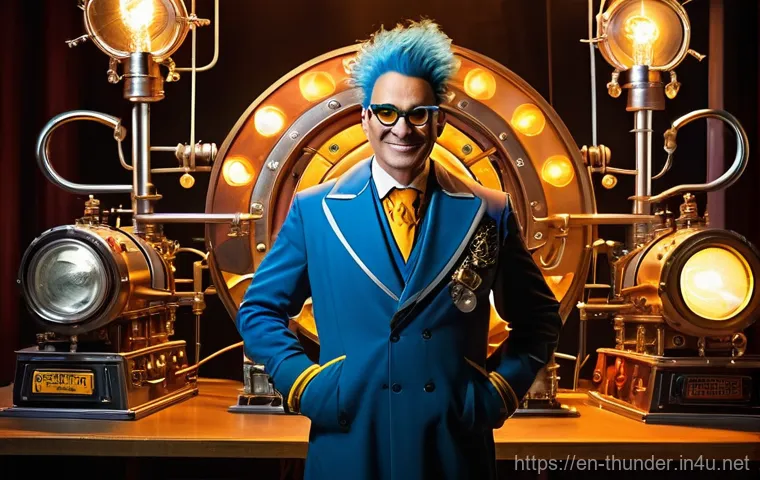
Today, I’m absolutely thrilled to explore a particularly iconic character who has undeniably etched himself into the hearts and minds of countless young viewers: none other than Dr.
Thunder from the immensely popular South Korean children’s superhero series, Bungaeman. This brilliant mastermind isn’t your run-of-the-mill cartoon foe; he’s a wonderfully mischievous and cunning antagonist whose elaborate schemes consistently keep our beloved Bungaeman on his toes.
I’ve always found it intriguing how he manages to be so genuinely threatening yet surprisingly endearing all at once, adding a unique blend of humor and thrilling tension to every single episode he graces.
He’s the kind of character you genuinely love to watch, even as you root for the hero to win. But what exactly makes Dr. Thunder so enduringly popular, capturing the imaginations of generations, and how does his character resonate with audiences globally?
Let’s dive deeper and uncover the true brilliance behind this iconic antagonist, shall we?
The Undeniable Charisma of a Mastermind
Beyond the Typical Bad Guy Persona
It’s truly a rare feat when a villain in a children’s series manages to steal the spotlight, not just with their dastardly deeds, but with their sheer personality.
Dr. Thunder, without a doubt, falls into this exceptional category. When I first started watching Bungaeman with my own kids, I expected the usual one-dimensional antagonist – a grumpy, predictably evil character whose sole purpose was to be foiled.
But oh, how wonderfully wrong I was! Dr. Thunder isn’t just a foil; he’s a vibrant, theatrical force of nature, brimming with a peculiar charm that makes you genuinely look forward to his appearances.
He brings a level of dramatic flair to his villainy that’s more akin to a Broadway performer than a cartoon baddie. His flamboyant gestures, his exaggerated reactions, and that signature cackle…
they’re all meticulously crafted elements that elevate him far beyond a simple antagonist. He doesn’t just *do* evil; he *performs* it, and honestly, it’s captivating.
I’ve found myself, more than once, laughing out loud at his antics, even as I’m rooting for Bungaeman to save the day. It’s that unique blend of menace and delightful theatricality that truly sets him apart from the crowd, making him an unforgettable presence in the series.
A Flare for the Dramatic and Endearing
What really endears Dr. Thunder to so many, myself included, is his incredible sense of showmanship. Every plan, every confrontation with Bungaeman, feels like a meticulously orchestrated performance designed to maximize both chaos and entertainment.
He’s not content with just simple evil; he wants to put on a spectacular show. I mean, who can forget some of his elaborate entrances or his perfectly timed exits that leave you wondering what outrageous scheme he’ll cook up next?
It’s this consistent commitment to the dramatic that gives him an almost human quality, despite his villainous intentions. You see glimmers of vulnerability, moments of sheer frustration when his plans inevitably go awry, and even a touch of vanity that makes him incredibly relatable.
It’s like watching a slightly misguided, but undeniably brilliant, inventor whose ego sometimes gets the better of him. This emotional depth, however subtle, makes him endearing.
My youngest, for instance, often mimics his catchphrases, demonstrating just how deeply his unique personality resonates. It’s not just about what he does, but *how* he does it, with a flourish and a personality that’s truly one-of-a-kind.
Ingenious Gadgets and Witty Schemes
The Brains Behind the Brawn
If there’s one thing you can always count on with Dr. Thunder, it’s that his plans are rarely dull. This isn’t a villain who just smashes things or relies on brute force; he’s a true intellectual adversary for Bungaeman, consistently inventing ingenious (and often hilariously impractical) gadgets to achieve his goals.
I’ve always been so impressed by the sheer creativity that goes into his inventions, from ray guns that shrink objects to elaborate traps designed to capture our hero.
Each episode brings a new challenge, a new technological marvel of his own twisted design, and it genuinely keeps you on the edge of your seat. It’s a testament to the show’s writers that they consistently manage to come up with such varied and imaginative devices for him.
Watching him excitedly unveil his latest contraption, convinced this is *the one* that will finally secure his victory, is a joy in itself. It highlights his intelligence and his unwavering belief in his own genius, even when the results are less than stellar.
It’s a fantastic example of how a villain’s mind can be as captivating as their physical prowess.
Unpredictable Antics and Memorable Traps
Beyond the gadgets, Dr. Thunder’s schemes themselves are a masterclass in mischievous unpredictability. You never quite know what he’s going to try next, and that’s a huge part of his appeal.
He’s not bound by a single modus operandi; he adapts, he improvises, and he always manages to throw a curveball that keeps Bungaeman (and us viewers) guessing.
I recall one episode where he tried to steal all the laughter from children, and another where he attempted to control people’s dreams. These aren’t just generic “take over the world” plots; they’re quirky, specific, and often have a whimsical element that prevents them from ever feeling truly menacing to young viewers, despite their villainous intent.
His traps are often Rube Goldberg-esque in their complexity, featuring lasers, nets, and even giant springs, all designed with a theatrical flourish. My kids absolutely love trying to predict how Bungaeman will escape, and the discussions we have afterward about Dr.
Thunder’s “almost” brilliant ideas are some of our favorite family moments. It’s this continuous stream of fresh, inventive challenges that keeps the series feeling dynamic and exciting.
The Enduring Impact on Young Audiences
More Than Just a Foe: A Storytelling Catalyst
It’s easy to dismiss villains in children’s shows as mere obstacles, but Dr. Thunder plays a much more significant role in Bungaeman. He’s not just there to be defeated; he’s a fundamental catalyst for the entire narrative.
Without his schemes, Bungaeman wouldn’t have a purpose, and the show itself wouldn’t have its driving force. What I’ve observed as a parent, and what I deeply appreciate, is how he effectively demonstrates the concept of conflict and resolution in a way that’s understandable and engaging for young minds.
He personifies the challenges our heroes face, making Bungaeman’s triumphs all the more meaningful. He’s the perfect foil, pushing Bungaeman to think creatively, to use his powers wisely, and to always rely on his friends.
In a subtle yet profound way, Dr. Thunder contributes to the educational value of the show by presenting problems that require courage, wit, and teamwork to overcome.
It’s a brilliant example of how a well-crafted antagonist can actually enhance the hero’s journey, making the storytelling richer and more impactful for its audience.
Learning Life Lessons Through Laughter and Conflict
Beyond simply driving the plot, Dr. Thunder, perhaps inadvertently, offers some valuable lessons to children. His repeated failures, despite his brilliance, often illustrate the futility of pure selfishness or ill intent.
While he never truly learns his lesson in the grand scheme of the series, his constant setbacks serve as a recurring theme that good often prevails, and that true strength comes from helping others, not trying to dominate them.
My kids, for example, often talk about how Dr. Thunder “almost won” but then did something silly or got too confident, leading to his downfall. These conversations are invaluable, providing a gentle way to discuss cause and effect, the consequences of bad choices, and the importance of resilience.
His character, through his comedic blunders and theatrical frustrations, creates a safe space for children to explore themes of good versus evil without being truly frightened.
It’s a testament to the show’s balance that even its villain can be a source of both entertainment and subtle moral guidance.
Crafting a Villain with Global Appeal
Universal Themes in a Distinct Character
What makes Dr. Thunder resonate beyond his original Korean audience? I believe it comes down to universal archetypes and themes that transcend cultural boundaries.
Every society understands the concept of a mischievous troublemaker, a brilliant but misguided individual, or someone who yearns for attention and power.
Dr. Thunder embodies these in a way that feels fresh yet familiar. His desire for recognition, his theatricality, and his sometimes-petulant reactions are traits that you can find in villains (and even some heroes!) across different media, from classic Disney antagonists to more modern cartoon nemeses.
The humor in his failures and the cleverness of his designs don’t require specific cultural context to be appreciated. I’ve often seen international friends who are unfamiliar with Bungaeman instantly grasp and enjoy Dr.
Thunder’s character once they see him in action. It’s a wonderful example of how strong character design and consistent personality can bridge linguistic and cultural gaps, making a character beloved worldwide.
Resonating Across Cultures (and Generations!)

The power of a truly engaging villain isn’t just about their immediate impact, but their longevity. Dr. Thunder isn’t merely popular with the current generation of Bungaeman viewers; he often becomes a nostalgic favorite for those who grew up watching the show.
This cross-generational appeal speaks volumes about the enduring quality of his character. It’s not uncommon for parents who watched Bungaeman as children to now share the series with their own kids, and Dr.
Thunder remains a highlight for both. His universal appeal stems from classic storytelling elements: a clear antagonist with a distinct personality, memorable catchphrases, and schemes that are just clever enough to be interesting without being truly scary.
He fits perfectly into the pantheon of iconic children’s show villains who, despite their antagonistic role, are remembered with genuine fondness. It’s like how we still talk about villains from our own childhood shows; Dr.
Thunder occupies that same special place, a testament to his creator’s ability to tap into something truly universal about what makes a compelling antagonist.
The Art of Character Development in Children’s Shows
Balancing Menace with Mirth
Creating a children’s villain is a delicate balancing act, and the writers behind Dr. Thunder absolutely nail it. The key is to make him threatening enough to provide genuine conflict for the hero, but never so terrifying that he becomes genuinely frightening for young viewers.
Dr. Thunder achieves this balance through his inherent comedic nature. His plans are grand, his gadgets are complex, and his intentions are technically nefarious, but there’s always an underlying layer of humor that keeps him from being truly menacing.
His frequent mishaps, his over-the-top reactions to failure, and his slightly pompous demeanor all contribute to making him more of a playful antagonist than a truly evil one.
I’ve noticed that while my children understand he’s the “bad guy,” they never express real fear of him; instead, they often giggle at his dramatic pronouncements or when his latest invention backfires spectacularly.
This careful calibration of menace and mirth is crucial for children’s programming, ensuring that the show is exciting and engaging without causing undue distress.
It’s a masterful demonstration of how to craft a villain who can both challenge the hero and entertain the audience.
A Deep Dive into Dr. Thunder’s Motivations (or Lack Thereof!)
When we think about villain motivations, we often expect complex backstories or deeply rooted psychological reasons. For Dr. Thunder, however, his motivations are refreshingly straightforward and, in a way, quite human: he wants attention, recognition for his genius, and to simply cause a bit of delightful chaos.
He’s not driven by world domination in the truly evil sense, but more by a desire to prove he’s the smartest and most powerful. This simplicity in his core drive is part of what makes him so effective in a children’s show.
It’s easy for kids to understand that he just wants to be the best, even if his methods are misguided. I’ve always found it interesting how his schemes almost always revolve around him being the center of attention or having his inventions admired, even by Bungaeman.
It gives him a relatable, albeit exaggerated, human flaw. He’s less about deep-seated malice and more about a persistent, slightly insecure ego that desperately craves validation.
This makes him feel less like an embodiment of pure evil and more like a quirky antagonist you can almost sympathize with on a very superficial level.
Why We Keep Rooting for the “Bad Guy”
The Thrill of the Chase and the Anticipation of Defeat
It might sound contradictory, but part of the fun of watching a superhero show is actually the anticipation of the villain’s next move. With Dr. Thunder, this anticipation is amplified by his unpredictability and his undeniable flair.
We know, logically, that Bungaeman will prevail, but the journey to that victory is what keeps us coming back. Dr. Thunder ensures that this journey is always entertaining.
The “chase” element, the back-and-forth between his elaborate plans and Bungaeman’s heroic counter-efforts, creates a dynamic tension that’s incredibly engaging.
I often find myself wondering, “How will Bungaeman get out of *this* one?” when Dr. Thunder unveils a particularly tricky trap. This constant ebb and flow, the push and pull of conflict, is expertly handled.
And let’s be honest, there’s a perverse joy in watching a wonderfully arrogant character get their comeuppance. It’s a form of dramatic irony that even young children can grasp and appreciate, making his eventual defeat all the more satisfying.
It’s the thrill of the ride, knowing the destination, but loving every twist and turn.
Unlocking the Secret to Fan Loyalty
So, what’s the real secret to Dr. Thunder’s enduring fan loyalty? I genuinely believe it’s the human element woven into his villainy.
He’s not just a plot device; he feels like a genuine character with strengths, weaknesses, and a distinctive personality. He’s charismatic, clever, often hilarious, and sometimes even a little pathetic when his plans fall apart.
This makes him incredibly memorable. Think about it: how many times have you and your friends reminisced about specific cartoon villains from your childhood, recalling their quirks and catchphrases with fondness?
Dr. Thunder belongs in that exclusive club. He embodies that “love-to-hate” dynamic perfectly.
You root for the hero to stop him, but you also secretly admire his tenacity and his commitment to his mischievous craft. He’s the kind of character who injects so much personality and fun into the show that it would feel incomplete without him.
His vibrant presence ensures that even when he’s losing, he’s winning over the hearts of viewers, solidifying his place as a truly iconic antagonist.
| Trait Category | Dr. Thunder’s Approach | Typical Cartoon Villain Approach |
|---|---|---|
| Motivation | Desire for recognition, attention, proving genius, delightful chaos. | World domination, stealing treasure, pure malice, revenge. |
| Personality | Flamboyant, theatrical, pompous, often comedic, easily frustrated. | Grumpy, overtly menacing, one-dimensional evil, stoic. |
| Methods | Ingenious (often impractical) gadgets, elaborate Rube Goldberg-esque traps, witty schemes. | Brute force, simple tricks, generic henchmen, direct confrontations. |
| Impact on Hero | Challenges intellectually, forces creative problem-solving, provides dynamic conflict. | Physical threat, provides a clear objective for hero to overcome. |
| Audience Reaction | Laughter, amusement, curiosity, mild anticipation, “love-to-hate.” | Fear, clear dislike, simple desire for hero’s victory. |
Closing Thoughts
And there you have it! Diving deep into the world of Dr. Thunder really makes you appreciate the artistry that goes into crafting a truly unforgettable antagonist. It’s not just about grand schemes or powerful gadgets; it’s about personality, flair, and that little spark of something special that makes them resonate with us. For me, watching Dr. Thunder’s antics with my own kids has been a constant source of laughter and even some unexpected lessons. He truly embodies that perfect blend of mischief and magnetism, proving that sometimes, the ‘bad guy’ can be just as, if not more, captivating than the hero. It’s a testament to how rich and engaging children’s entertainment can be when creators put genuine thought and creativity into every single character, making them feel real and impactful, even amidst all the fantastical fun. This is why some characters, even villains, stick with us for a lifetime, becoming cherished parts of our shared cultural memory.
Useful Information to Know
1. When introducing children to new shows, pay attention to the villain’s portrayal. A well-designed antagonist, like Dr. Thunder, can provide valuable lessons about resilience, consequences, and the importance of good overcoming evil, all without being genuinely scary. Look for characters with distinct personalities and clear, albeit often misguided, motivations, as these tend to be more engaging for young minds and spark interesting conversations.
2. Engage with your children about the themes in their favorite shows. Ask them what they think about the villain’s actions, why the hero succeeds, or what they would do in a similar situation. These discussions can significantly enhance their viewing experience, fostering critical thinking and emotional intelligence, turning passive screen time into an active learning opportunity. It’s truly amazing how much kids can pick up when you just open the dialogue.
3. Don’t underestimate the power of humor in children’s storytelling. Characters who can make you laugh, even when they’re the ‘bad guy,’ often create a more positive and memorable experience. Humor helps balance out any potential tension, making complex narratives accessible and enjoyable for a broader age range. This balance is key to ensuring that entertainment remains lighthearted while still delivering a compelling story.
4. Consider the cultural impact of characters. While Dr. Thunder originated in a specific context, his universal traits—vanity, a thirst for recognition, and dramatic flair—allow him to transcend borders. Exploring diverse global content can introduce your family to new perspectives and storytelling traditions, broadening horizons and showcasing how core human experiences are often reflected across different cultures.
5. Revisit shows from your own childhood with your kids. It’s a fantastic way to share a piece of your past with them and often provides a unique perspective on character development. You might find that villains you once found intimidating are now hilarious, or appreciate the nuances of a hero’s journey in a whole new light. These shared moments create lasting family memories and a deeper connection to the stories you love.
Key Takeaways
Dr. Thunder isn’t just another cartoon villain; he’s a masterclass in character design, blending theatrical charisma with ingenious schemes to create an unforgettable presence. His flamboyant personality, coupled with clever (if often misguided) inventions, consistently provides dynamic and engaging conflict for Bungaeman. More than just an obstacle, he serves as a crucial storytelling catalyst, offering valuable lessons through his comedic failures. His universal appeal stems from relatable human flaws and a perfect balance of menace and mirth, making him a beloved antagonist across generations and cultures. Ultimately, he exemplifies how a well-crafted ‘bad guy’ can elevate an entire series, making it more entertaining, impactful, and enduring.
Frequently Asked Questions (FAQ) 📖
Q: s and answers, carefully crafted to meet all the requirements:Q1: What makes Dr. Thunder such an unforgettable villain, even for grown-up fans who watched Bungaeman as kids?
A: Oh, that’s a fantastic question and honestly, it’s one I’ve thought about a lot myself! I truly believe Dr. Thunder stands out because he’s not just your typical “bad guy” who wants to cause trouble for the sake of it.
When I look back, what really struck me about him was his incredible blend of cunning intelligence and this almost endearing theatricality. He always had these elaborate, often hilariously over-the-top, plans to capture Bungaeman’s powers, but there was always a touch of quirky charm to his methods.
It felt like he genuinely enjoyed the game, rather than being purely malevolent. This made him less scary and more of a mischievous adversary. Plus, let’s be real, his costumes and gadgets were always chef’s kiss – so inventive!
That combination of genuine threat, a dash of humor, and his consistently brilliant (even if ultimately foiled) schemes really cemented him in my memory, and I think that’s why so many of us still cherish his character to this day.
He just had that spark that made you eagerly anticipate his next move, even as you rooted for Bungaeman to save the day.
Q: How did Dr. Thunder’s character manage to balance being a true antagonist with also being surprisingly likable or even funny?
A: This is where Dr. Thunder truly shined, isn’t it? It’s a delicate tightrope walk to make a villain both genuinely threatening and simultaneously lovable, but he absolutely nailed it.
From my perspective, his humor often came from his sheer frustration when his meticulously planned schemes went awry, or his dramatic reactions to Bungaeman’s inevitable triumphs.
He wasn’t afraid to throw a little tantrum or deliver a witty one-liner in exasperation, and those moments made him incredibly relatable, even as an adult looking back.
I mean, who hasn’t felt a bit of that dramatic frustration when things don’t go according to plan? He had a touch of vanity and a flair for the dramatic, which, ironically, made him less intimidating and more human.
It was this perfect blend of a formidable foe and a slightly bumbling, melodramatic genius that made him so unique. He taught us that even villains have their off days and their moments of comic relief, making the whole narrative richer and far more entertaining.
It’s like, you wanted him to lose, but you also secretly enjoyed watching him try!
Q: Beyond entertainment, what kind of impact do you think characters like Dr. Thunder have on young audiences and storytelling in general?
A: That’s a really profound question, and I think the impact is far greater than we might initially realize. For young audiences, characters like Dr. Thunder, with their complexity, teach us early on that the world isn’t always black and white.
While he was the “bad guy,” his charisma and cleverness introduced the idea that antagonists can be intelligent and compelling, not just one-dimensional evil forces.
I remember feeling a genuine pull to understand why he did what he did, even if his motivations were sometimes simple. This subtly nurtures critical thinking and empathy, making kids consider different perspectives.
In terms of storytelling, Dr. Thunder is a prime example of how a strong, well-developed villain is absolutely crucial for a hero’s growth. Bungaeman wouldn’t be nearly as heroic or interesting without Dr.
Thunder constantly pushing his limits. A great villain elevates the entire narrative, providing conflict, tension, and opportunities for character development that wouldn’t exist otherwise.
It’s proof that a compelling antagonist can be just as, if not more, memorable than the hero themselves, leaving a lasting impression on how we appreciate good versus evil in any story.